Home | Contact | Español (soon)...

Ocean Freight

Ocean Freight

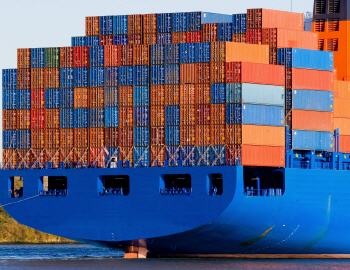
Ocean Freight is the most economic form of transportation by which goods are moved between countires in the export process. We confirm the best and most efficient way possible to meet your ocean cargo criteria, whether it be containers, break bulk, flat racks, LCL and gateway consolidations, HAZMAT, or import/export.
read more ...

Air Freight

Air Freight

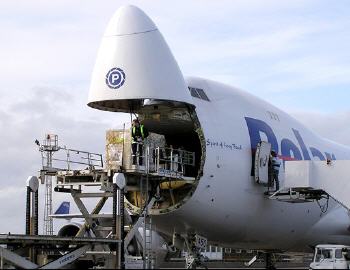
Air Freight parcel delivery is the transfer and shipment of goods via an air carrier, which may be charter or commercial. Intercargo provides a variety of general air freight services from most origins to any destination in the world.

read more ...

Custom Broker

Custom Broker

Custom Clearance Intercargo are Dominican`s customs brokers providing efficient and trouble free customs clearing services for all types of product, whether by airfreight, or seafreight. One call to one number is all that you need make to move your important business from any point in the world. You may leave the rest of the organisation to Intercargo and our hand picked overseas offices

read more ...

Project Cargo

Project Cargo

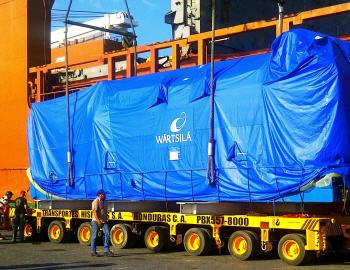
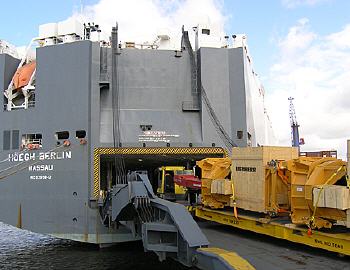
Industrial project cargoes, heavy lift and oversized goods and very valuable and subject to special attention and time sensitive transport design. To ensure that each single step works without interruption, INTERCARGO offer personal supervision during the cargo operations throughout the transportation chain.
Service include, according to the customer’s requirements, for example supervision of loading and /or unloading, photo coverage and videotaping, safeguarding the cargo documentation and on -time reporting.

read more ...

Event Services

Event Services

Also, Intercargo delivers hand made logistical planning and specialist transportation that cater to and is tailored for music tours, trade shows, exhibitions and corporate events. The in house team are expert in, the provision of logistics, vehicle provision, customs clearance, ATA Carnets. Need info from above and more, call or send mail to Volker Rempel, Intercargo President. Having previously worked with clients such as, Luis Miguel, Ricky Martin, Red Bull and Andy Garcia, to name a few, the guys are more than qualified to run the projects of and size and specification, read more...

read more ...

International Moving

International Moving

INTER-CARGO provide full container service and lift van services to and from the Dominican Republic with complete documentation, custom assistance, insurance, shipping, storage and inland transportation.
We are specialized in export packing and crating, antique and fine arts, shipping all types of cargo, from personal effects and household goods to general cargo, cars and boats.

read more ...
You are here:: Home

Incoterms

Group E - Departure
EXW – Ex Works (named place): The seller makes the goods available at his premises. The buyer is responsible for all charges. This term means that the seller fulfills its obligation to deliver when it has made the goods available at its premises (i.e. works, factory, warehouse, etc.) to the buyer. The seller is not responsible for loading the goods on the vehicle provided by the buyer. Unless otherwise agreed, the seller is not responsible for clearing the goods for export. EX WORKS represents the minimum obligation for the seller. It should not be used when the buyer cannot carry out, directly or indirectly, the export formalities.
This term may be the easiest to administer, however may not be in the seller's best interests. There is no control over the final destination of the goods. It may be possible for the buyer to negotiate better freight rates than the seller.
Group F – Main carriage unpaid
FCA – Free Carrier (named place): The seller hands over the goods, cleared for export, into the custody of the first carrier (named by the buyer) at the named place. This term is suitable for all modes of transport, including carriage by air, rail, road, and containerised / multi-modal transport.
FAS – Free Alongside Ship (named loading port): The seller must place the goods alongside the ship at the named port. The seller must clear the goods for export; this changed in the 2000 version of the Incoterms. Suitable for maritime transport only.
FOB – Free on board (named loading port): The seller must load the goods on board the ship nominated by the buyer, cost and risk being divided at ship's rail. The seller must clear the goods for export. Maritime transport only. It also includes Air transport when the seller is not able to export the goods on the schedule time mentioned in the letter of credit. In this case the seller allows a deduction of sum equivalent to the carriage by ship from the air carriage.
Group C – Main carriage paid
CFR – Cost and Freight (named destination port): Seller must pay the costs and freight to bring the goods to the port of destination. However, risk is transferred to the buyer once the goods have crossed the ship's rail. Maritime transport only.
CIF – Cost, Insurance and Freight (named destination port): Exactly the same as CFR except that the seller must in addition procure and pay for insurance for the buyer. Maritime transport only.
CPT – Carriage Paid To (named place of destination): The general/containerised/multimodal equivalent of CFR. The seller pays for carriage to the named point of destination, but risk passes when the goods are handed over to the first carrier.
CIP – Carriage and Insurance Paid (To) (named place of destination): The containerised transport/multimodal equivalent of CIF. Seller pays for carriage and insurance to the named destination point, but risk passes when the goods are handed over to the first carrier.
Group D – Arrival
DAF – Delivered At Frontier (named place): This term can be used when the goods are transported by rail and road. The seller pays for transportation to the named place of delivery at the frontier. The buyer arranges for customs clearance and pays for transportation from the frontier to his factory. The passing of risk occurs at the frontier.
DES – Delivered Ex Ship (named port): Where goods are delivered ex ship, the passing of risk does not occur until the ship has arrived at the named port of destination and the goods made available for unloading to the buyer. The seller pays the same freight and insurance costs as he would under a CIF arrangement. Unlike CFR and CIF terms, the seller has agreed to bear not just cost, but also Risk and Title up to the arrival of the vessel at the named port. Costs for unloading the goods and any duties, taxes, etc… are for the Buyer. A commonly used term in shipping bulk commodities, such as coal, grain, dry chemicals - - - and where the seller either owns or has chartered, their own vessel.
DEQ – Delivered Ex Quay (named port): This is similar to DES, but the passing of risk does not occur until the goods have been unloaded at the port of destination.
DDU – Delivered Duty Unpaid (named destination place): This term means that the seller delivers the goods to the buyer to the named place of destination in the contract of sale. The goods are not cleared for import or unloaded from any form of transport at the place of destination. The buyer is responsible for the costs and risks for the unloading, duty and any subsequent delivery beyond the place of destination. However, if the buyer wishes the seller to bear cost and risks associated with the import clearance, duty, unloading and subsequent delivery beyond the place of destination, then this all needs to be explicitly agreed upon in the contract of sale.
DDP – Delivered Duty Paid (named destination place): This term means that the seller pays for all transportation costs and bears all risk until the goods have been delivered and pays the duty. Also used interchangeably with the term "Free Domicile". The most comprehensive term for the buyer. In most of the importing countries, taxes such as (but not limited to) VAT and excises should not be considered prepaid being handled as a "refundable" tax. Therefore VAT and excises usually are not representing a direct cost for the importer since they will be recovered against the sales on the local (domestic) market.